A small set of real media items for discussion and Challenge 03.
Prompt: What information or function would someone lose if they could not perceive each item as presented?
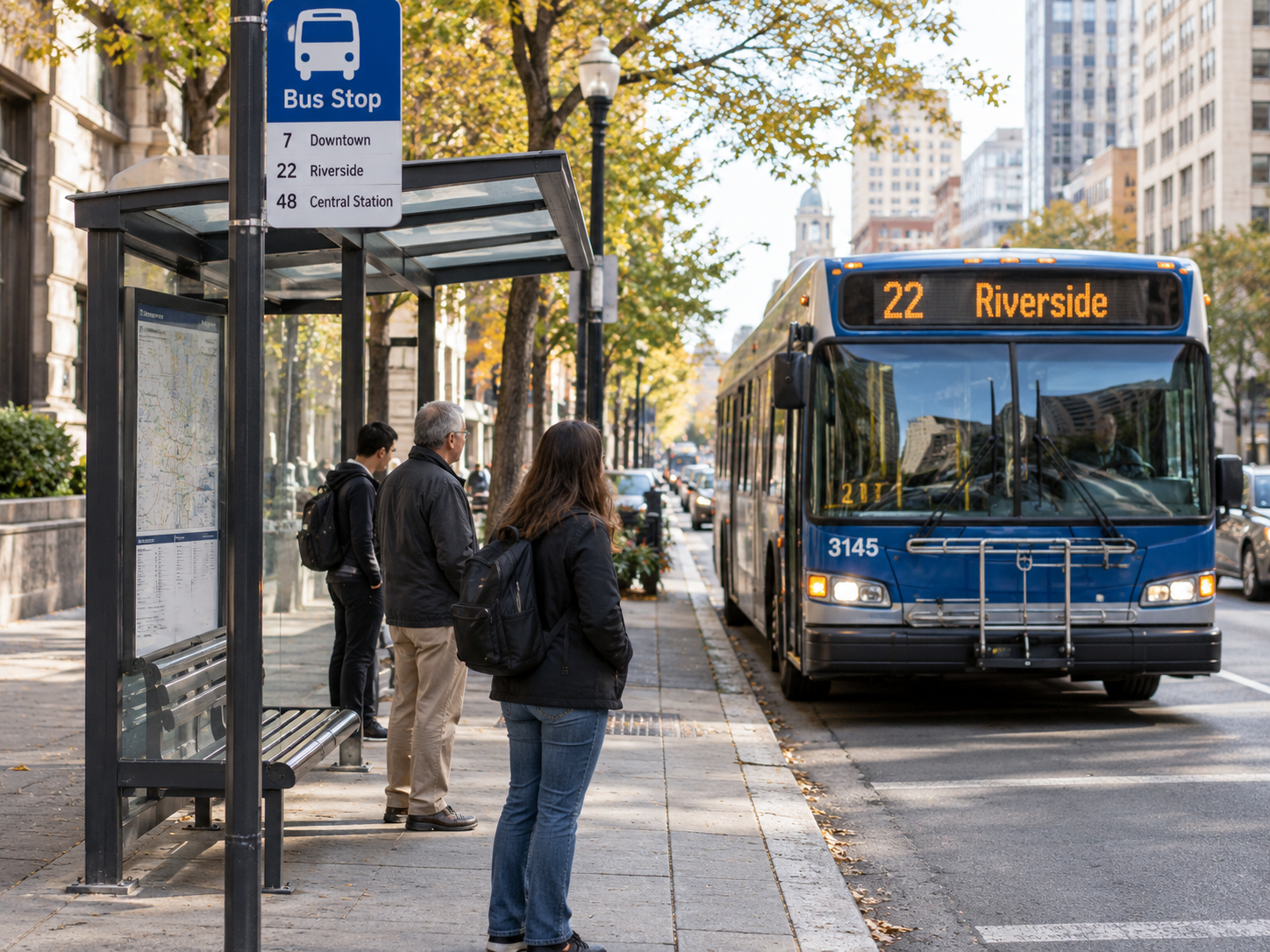
Photo of a city street with a bus stop
Image
This photograph may be used in a neighborhood article or route guide. The key question is whether the image is simply atmospheric or whether it carries information that matters to the story.
Source
Unsplash, used for class discussion. Source and licensing details should be verified on the original host before reuse in production.
Decorative storefront illustration
Image
This kind of image may exist purely for visual atmosphere. A description would likely add noise rather than meaningful information.
Source
Unsplash, used for class discussion. Source and licensing details should be verified on the original host before reuse in production.
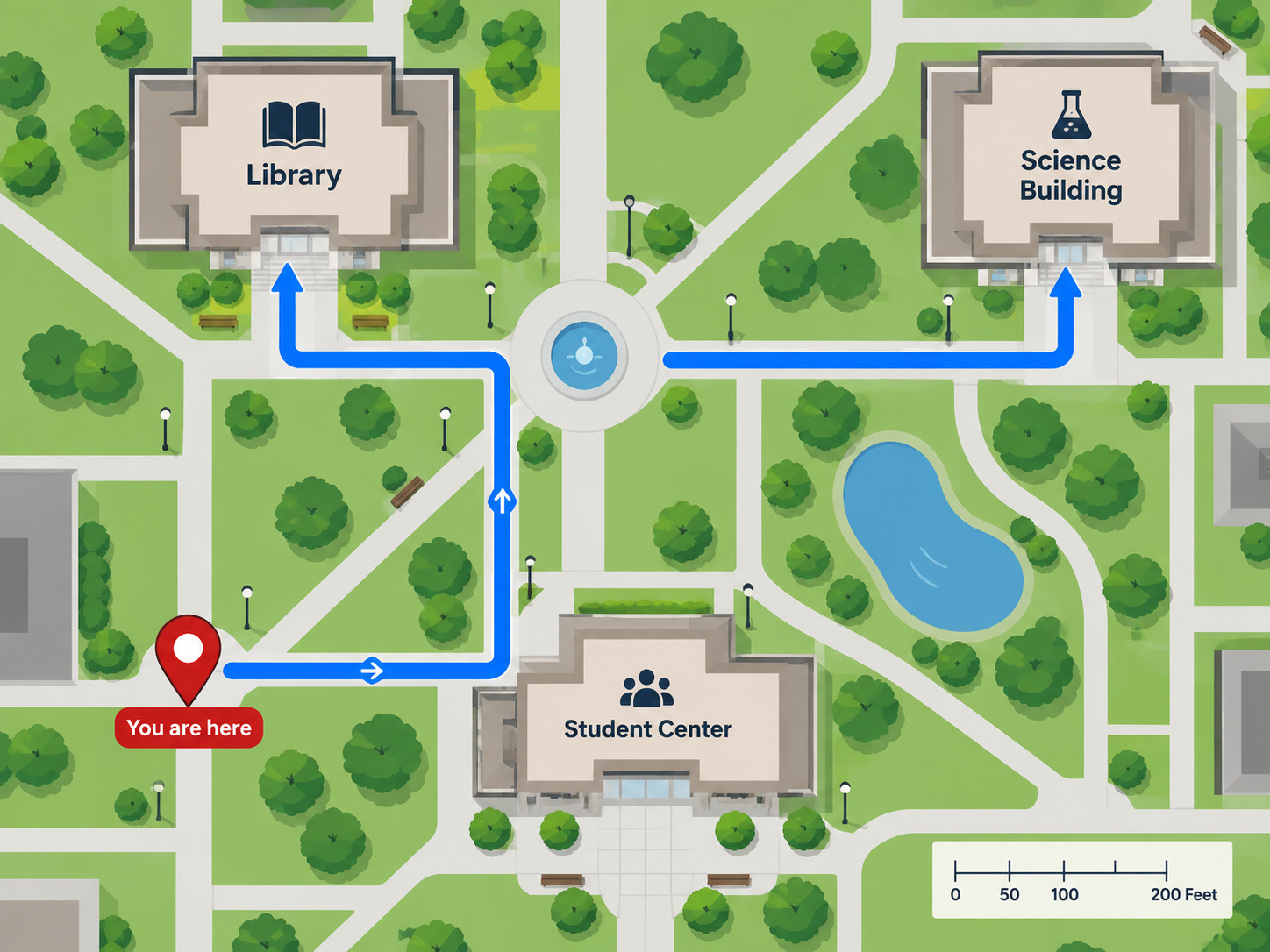
Map with a highlighted route
Image
This image contains direction information. A student who cannot see it would miss the route itself or the relationship between locations unless the information is preserved elsewhere.
Source
Locally hosted map image for class discussion.
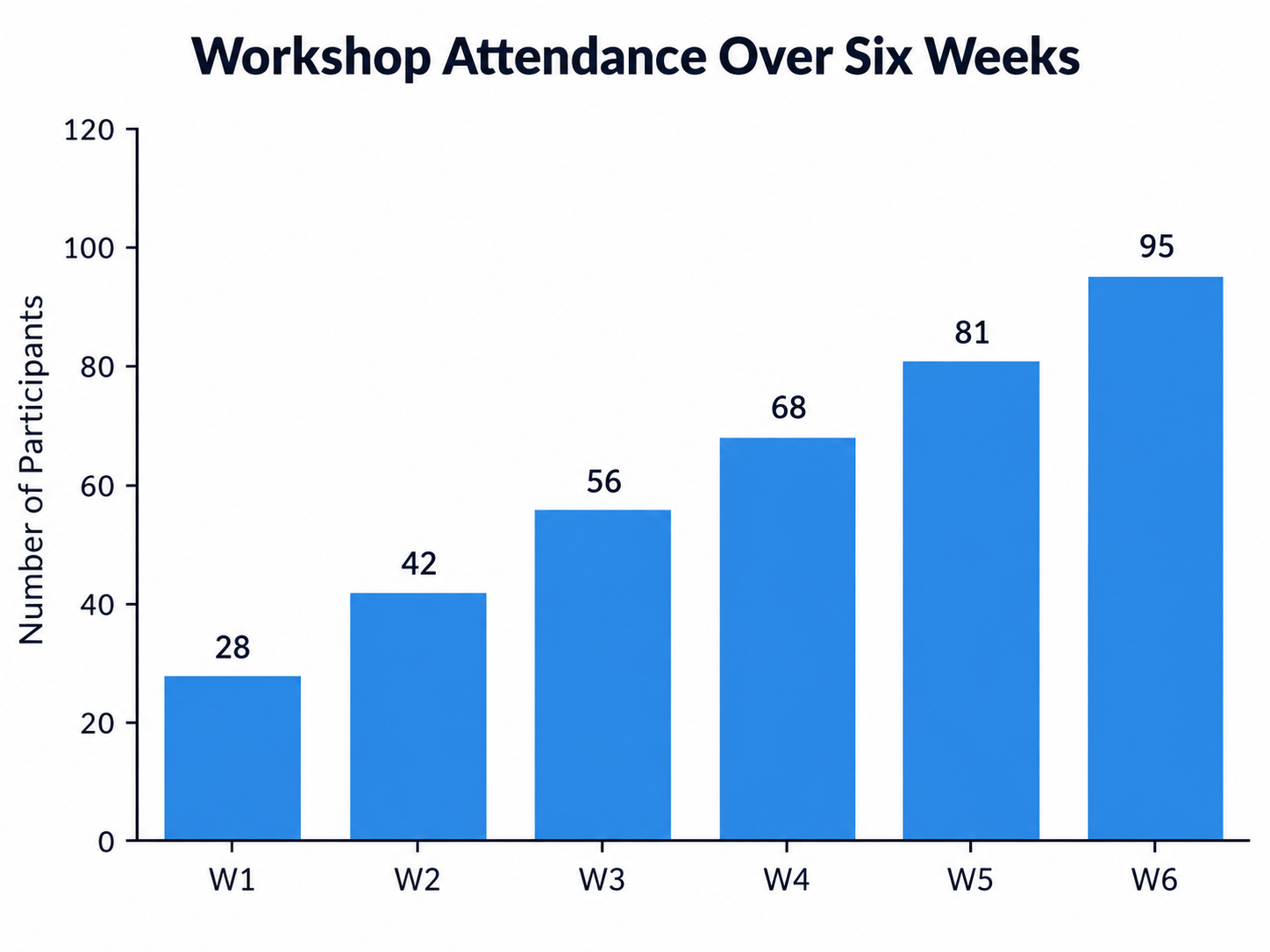
Weekly attendance chart
Image
This image contains direction information. A student who cannot see it would miss the trend in attendance unless the information is preserved elsewhere.
Source
Locally hosted attendance chart for class discussion.
Audio clip: hazardous material incident
Audio
What would happen if someone could not hear this hazardous material incident? Consider which warnings, instructions, or other information would be unavailable without a transcript or accessible text alternative.
Source
Whelen hazardous material incident audio clip. Accessed from https://cdn.whelen.com/a8/ac/a8975d6348e0a027e75ca183fd11/hm1.mp3
Explore how captions make spoken dialogue and important sounds available to people who are deaf or hard of hearing. The video also shows why accurate, synchronized captions support many other learners.
Source
W3C Web Accessibility Initiative: Perspective Videos — Captions.